













EU Packaging Regulation · applies from August 12, 2026
PPWR Compliance Software
The Packaging and Packaging Waste Regulation (PPWR) introduces new obligations for manufacturers, producers, importers, and distributors. PPWR is more than a packaging topic. It is a supply chain topic. Those who secure the right data from their supply chain now will be prepared. Substantio is your tool for managing PPWR compliance requirements.
What the PPWR Is About
The PPWR has a clear objective: reduce packaging waste across the EU, strengthen the circular economy, expand reuse, and establish uniform rules for all member states.
To achieve this, it places new obligations on manufacturers, producers, importers, and distributors – and raises a central question: who in the supply chain holds which information? And how do we get the data we need? Best directly from your suppliers. With Substantio.
Substantio helps you request PPWR-relevant data from your supply chain in a structured way, document it, and make it audit-ready.
How Substantio Supports Your PPWR Implementation
The biggest challenge with the PPWR isn’t the regulation itself – it’s getting the data. The information you need for the declaration of conformity and technical documentation often doesn’t sit with you, but with your packaging suppliers. Close that gap now.
With the Substantio Compliance Hub, you collect the relevant information from your supply chain, manage it, and generate evaluations and risk assessments. You can query any topic across your supply chain in a targeted way – for example, details on packaging materials, recyclability, substances of concern (PFAS, heavy metals), and more. The questionnaires are sent directly to your suppliers. Responses flow into the system in a structured way and are assigned to the corresponding products and parts in your bill of materials (BOM). The result: an organized, audit-ready data foundation – the basis for your EU declaration of conformity under the PPWR and a first step toward the Digital Product Passport.
PPWR implementation won't work without coordination across the supply chain. Producers need information from suppliers. Importers must provide evidence. Distributors carry their own obligations. Substantio digitally connects all parties – for seamless information flow and complete documentation across the entire supply chain.
The packaging information collected via the Compliance Hub is assigned directly to the corresponding products and parts in your BOM. You always know which packaging meets which requirements – and where action is still needed.
The PPWR requires producers to issue an EU declaration of conformity (DoC) and create technical documentation. Substantio helps you systematically capture the necessary data and keep it organized and accessible.
The data you collect today for PPWR compliance will be the foundation for the Digital Product Passport (DPP) tomorrow. Those who digitally connect their supply chain and capture packaging data in a structured way now are already well positioned for upcoming requirements.
What Is the PPWR?
The PPWR (Packaging and Packaging Waste Regulation, Regulation EU 2025/40) is the new European packaging regulation. It replaces the previous EU Packaging Directive 94/62/EC and establishes for the first time a uniform, binding framework for all packaging on the EU market – regardless of material, whether empty or filled, whether manufactured within the EU or imported.
The PPWR aims to significantly reduce packaging waste in the EU, strengthen the circular economy, and ensure a functioning European single market through harmonized requirements.
The PPWR entered into force on February 11, 2025. The general application date is August 12, 2026 – however, some requirements apply at a later date.
Who Is Affected by the EU Packaging Regulation?
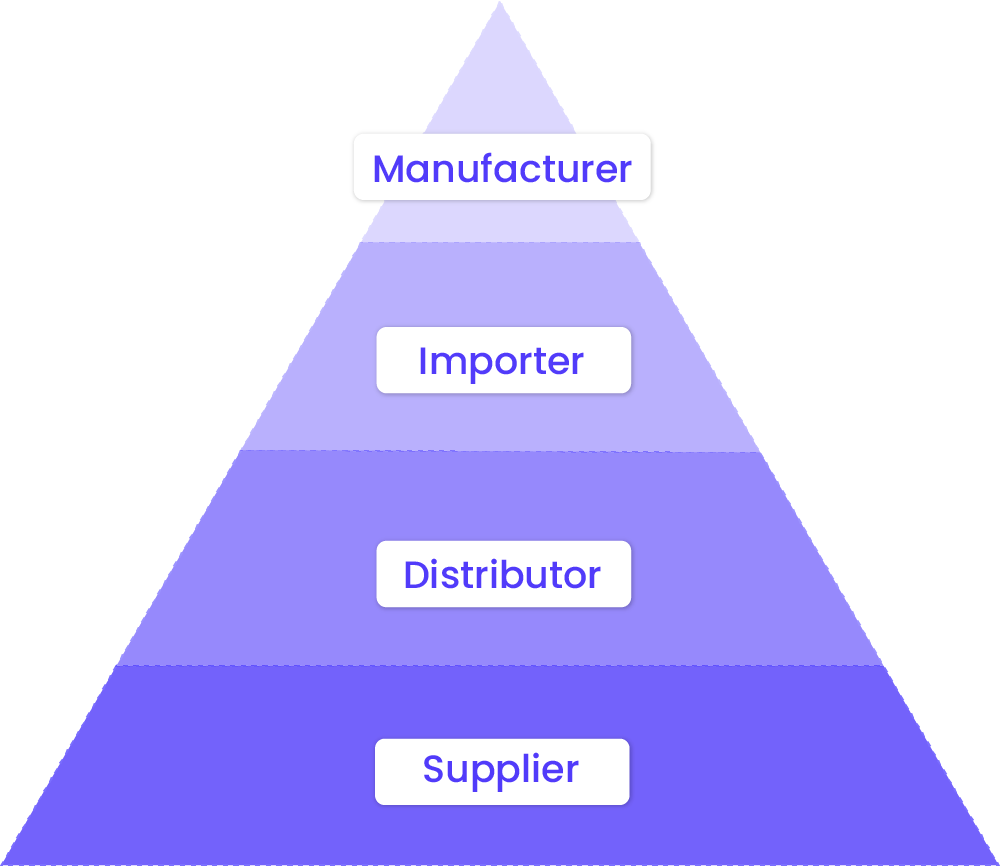
The PPWR applies to all companies placing packaging on the EU market – regardless of industry or company size. What matters is the role a company plays in the supply chain. The PPWR distinguishes clearly between four economic operators:
Producer:
Anyone who manufactures or has packaging or a packaged product manufactured under their name or brand. The producer is responsible for packaging conformity and must issue an EU declaration of conformity and create technical documentation. There can only be one producer per supply chain.
Importer:
Anyone who brings complete, empty packaging or packaged products from a third country into the EU.
Distributor:
Anyone who makes packaging or packaged products available in Germany from another EU member state.
Supplier:
Anyone who supplies packaging materials or components. Suppliers must provide the producer with all necessary information to demonstrate conformity.
Important: The EPR-obligated “manufacturer” (Hersteller) under extended producer responsibility (EPR) is – depending on the supply chain structure – the producer, importer, or distributor. Not to be confused with the term “producer” (Erzeuger) under the PPWR.
The determining factor is which economic operator opens the supply chain in the member state where the packaging becomes waste. In other words: whoever stands first in the domestic supply chain bears the EPR obligations – and thus the responsibility for registration, licensing, and quantity reporting.
What Applies from August 2026 – and What Comes Later?
The PPWR takes effect in stages. From August 12, 2026, the following requirements apply immediately:
- All obligations of economic operators under Chapter IV of the PPWR (producer, importer, distributor, supplier)
- Substance restrictions under Art. 5 – in particular the PFAS ban in food-contact packaging
- Producer identification: packaging must identify the producer
- Packaging identification labeling (type, batch, or serial number)
- Conformity assessment procedure by the producer
- EU declaration of conformity and technical documentation
Requirements with a later application date (selection):
From August 12, 2028: Labeling of material composition (harmonized sorting labels)
From January 1, 2030:
- Recyclability of all packaging according to design-for-recycling criteria
- Minimum recycled content in plastic packaging
- Packaging minimization by weight and volume
- Max. 50% void space ratio for transport, grouped, and e-commerce packaging
- Reuse targets for transport and beverage packaging
- Bans on certain single-use packaging formats
Your Challenges in PPWR Implementation
Information gaps in the supply chain
Producers often don't know the manufacturing process of packaging materials in detail – that information sits with the supplier. Conversely, suppliers don't always know the end use case. Without structured communication, gaps arise that complicate the conformity assessment.
Role clarity: who is actually responsible for what?
The terms producer, manufacturer, importer, and distributor are frequently confused in practice. Incorrect role assignment leads to misallocated responsibilities – and in the worst case, missing documents by the deadline.
EU declaration of conformity and technical documentation
The PPWR requires an EU declaration of conformity for each packaging type and extensive technical documentation. Without the right data from the supply chain, this is barely scalable.
PFAS and substances of concern
The PFAS ban in food-contact packaging applies from August 2026. Companies must check whether their packaging contains PFAS or other substances of concern – and obtain that information from their suppliers.
Demonstrating recyclability
Recyclability is not just a question of material – it is a systemic assessment of design, collection, sorting, and recycling process. The evaluation is complex and must be documented.
Regulatory uncertainty
The regulatory framework continues to evolve: EU guidelines, harmonized standards, and the new German VerpackDG (replacing the VerpackG from August 12, 2026) are still in development. Companies must actively monitor developments.
Ready for PPWR Implementation?
August 2026 is getting closer. The companies that structure their supply chain and collect the right data now will be prepared. Substantio supports you – with the Request Studio for structured supplier requests, digital supply chain communication, and a central data foundation for compliance and sustainability.
FAQ's

When does the PPWR apply?
The PPWR generally applies from August 12, 2026. Some requirements – such as recyclability, recycled content targets, and reuse quotas – don’t apply until 2030. The PFAS ban in food-contact packaging and the obligation to issue an EU declaration of conformity apply from August 2026.
What is the difference between the PPWR and the German Packaging Act (VerpackG)?
The German Packaging Act (VerpackG) governs extended producer responsibility (EPR) in Germany – covering registration, licensing, and quantity reporting obligations. The PPWR is the overarching EU regulation that sets requirements for the packaging itself: design, material composition, recyclability, labeling, and conformity assessment. In Germany, the VerpackG is being replaced by the new VerpackDG, which also applies from August 12, 2026.
Who must issue an EU declaration of conformity?
The obligation to issue the EU declaration of conformity lies with the producer. They must issue a written declaration of conformity for each packaging type and retain it together with the technical documentation for at least 5 years (single-use packaging) or 10 years (reusable packaging) after placing on the market.
What is meant by "producer" (Erzeuger) under the PPWR?
A producer under the PPWR is anyone who manufactures or has packaging or a packaged product manufactured under their name or brand. There can only be one producer per supply chain and per packaging unit. For sales and grouped packaging, this is typically whoever fills the product.
What does the PFAS ban in the PPWR mean?
From August 12, 2026, PFAS in food-contact packaging are restricted to certain limit values. The restriction applies to both intentionally added and unintentionally present PFAS. Manufacturers must demonstrate compliance with these limits and obtain the relevant information from their suppliers.
Does the PPWR also apply to B2B packaging?
Yes. The PPWR applies to all packaging placed on the EU market – regardless of whether it is B2C or B2B. Transport packaging and industrial packaging also fall under the regulation.
What is the connection between the PPWR and the Digital Product Passport?
The Digital Product Passport (DPP) is being introduced progressively in the EU from July 2026. The data companies collect for PPWR compliance – material composition, recyclability, substances of concern – forms an important foundation for the DPP. Those who digitally connect their supply chain and capture packaging data in a structured way today are already well prepared for the DPP.
What does PPWR stand for?
PPWR stands for Packaging and Packaging Waste Regulation – the official designation is Regulation (EU) 2025/40 of the European Parliament and of the Council of December 19, 2024 on packaging and packaging waste. It replaces the previous EU Packaging Directive 94/62/EC.
What is the European Packaging Regulation 2025
The European Packaging Regulation 2025 (PPWR) is a uniform, binding EU framework for all packaging on the European market. It sets requirements for packaging design, recyclability, material composition, labeling, and the obligations of economic operators. Unlike the previous directive, it applies as a regulation directly in all EU member states – without national transposition.
Who does the new packaging regulation apply to?
The PPWR applies to all companies placing packaging on the EU market – regardless of industry, company size, or origin. This includes manufacturers, importers, distributors, and suppliers. Companies outside the EU that deliver products directly to EU end users also fall under the regulation.
What new packaging requirements are there?
The PPWR introduces, among others: obligation to issue an EU declaration of conformity and technical documentation (from August 2026), PFAS ban in food-contact packaging (from August 2026), recyclability of all packaging (from 2030), minimum recycled content in plastic packaging (from 2030), reuse targets for transport and beverage packaging (from 2030), and bans on certain single-use formats (from 2030).